01
Sit with the work first.
Before any code, we watch the actual workflow. Where does it slow down, what does a bad day look like, what would a sensible human do?
Primary practice
Quiet software that does the boring half of the job. Built to hold up under real load, not just demo well on a laptop.
What we're replacing
A typical Monday in an eight-person ops team
Before
time burned
3h 12m
After we ship
time touched
3 minutes
Across a team of eight, that's ~25 hours back every week.
The pain
Smart people, spending half their week on work a machine could do.
Copy-pasting between four tools to assemble one report.
Reading the same six emails every Monday before anything starts.
Fixing the same typo in twelve places, hoping you caught them all.
High stakes if something gets missed — and something always gets missed.
Approach
01
Before any code, we watch the actual workflow. Where does it slow down, what does a bad day look like, what would a sensible human do?
02
Build for the predictable cases first. When the system isn't sure, it pauses and flags it, with full context attached. Costs, retries, and logs visible from day one.
03
If a model's involved, the new one runs alongside the incumbent. We only switch when the new one actually wins on the measures that matter. No blind swaps.
04
Feeds drop records, services blip, things go slow. A summary that takes eight seconds is a summary nobody reads. We design for those moments, not around them.
Initiatives
Concrete things we've built or are building, against this kind of pain.
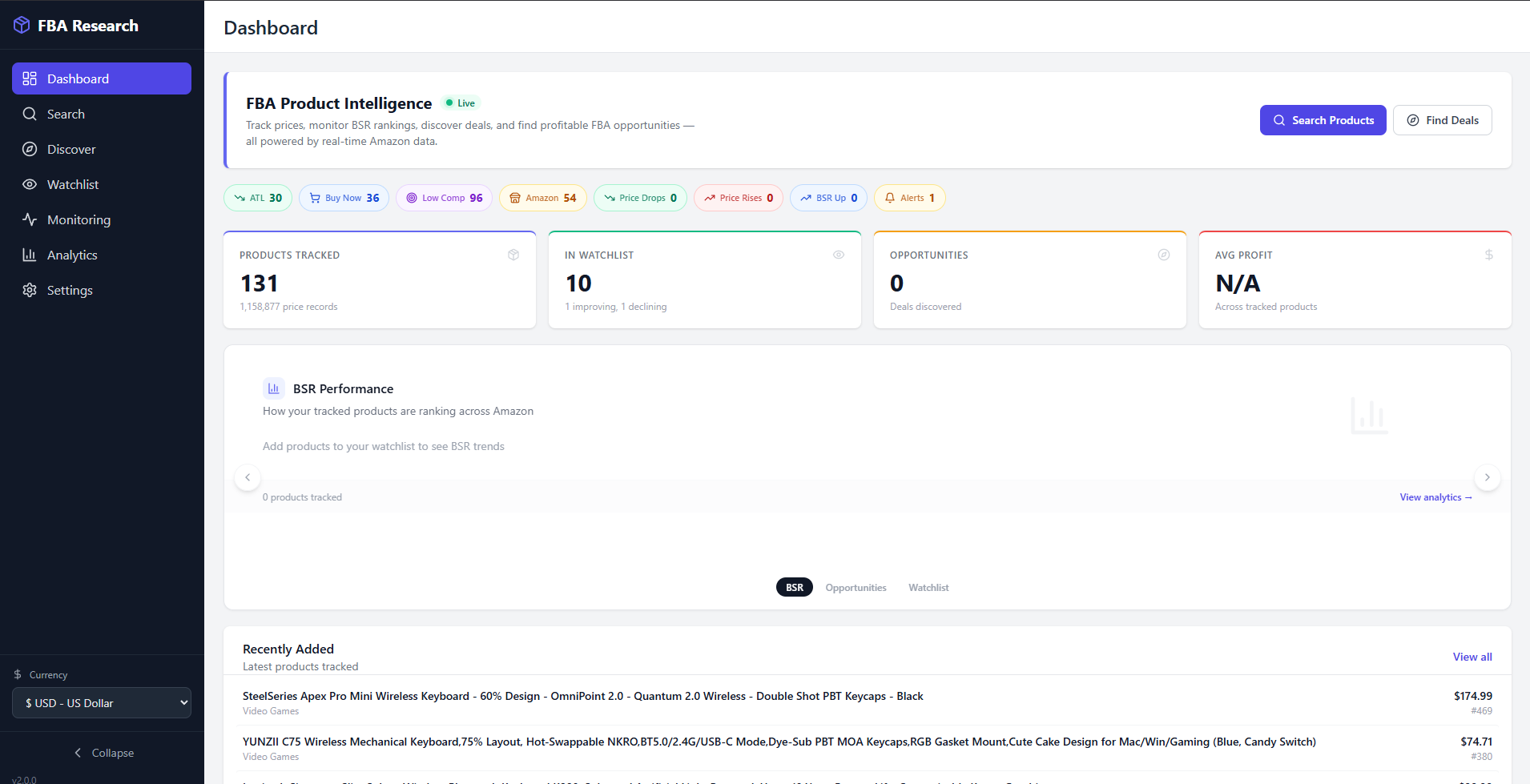
01 / Production
A Z-score-based price anomaly system running over 1M+ Amazon FBA records, surfacing outliers automatically rather than via manual scanning.
FBA Research Platform02 / Pattern
Pattern: messy unstructured input (PDFs, spreadsheets, emails) into a queryable structured store with an LLM doing the parsing and an audit trail behind it.
03 / Pattern
RAG over a client's internal documents so their team can ask questions in plain language instead of digging through files.
Roadmap
How an engagement typically unfolds. Not rigid, but the shape repeats.
Phase 01
Map the workflow. Find what's actually slow and where mistakes happen. Decide what to skip.
Built with